Why a fast emergency response matters
When a storm damages a commercial roof, speed matters, since the consequences of a compromised roof grow the longer it stays open. For a Peru facility owner, understanding why fast response is critical underscores the value of acting immediately rather than waiting.
Water damage spreads quickly
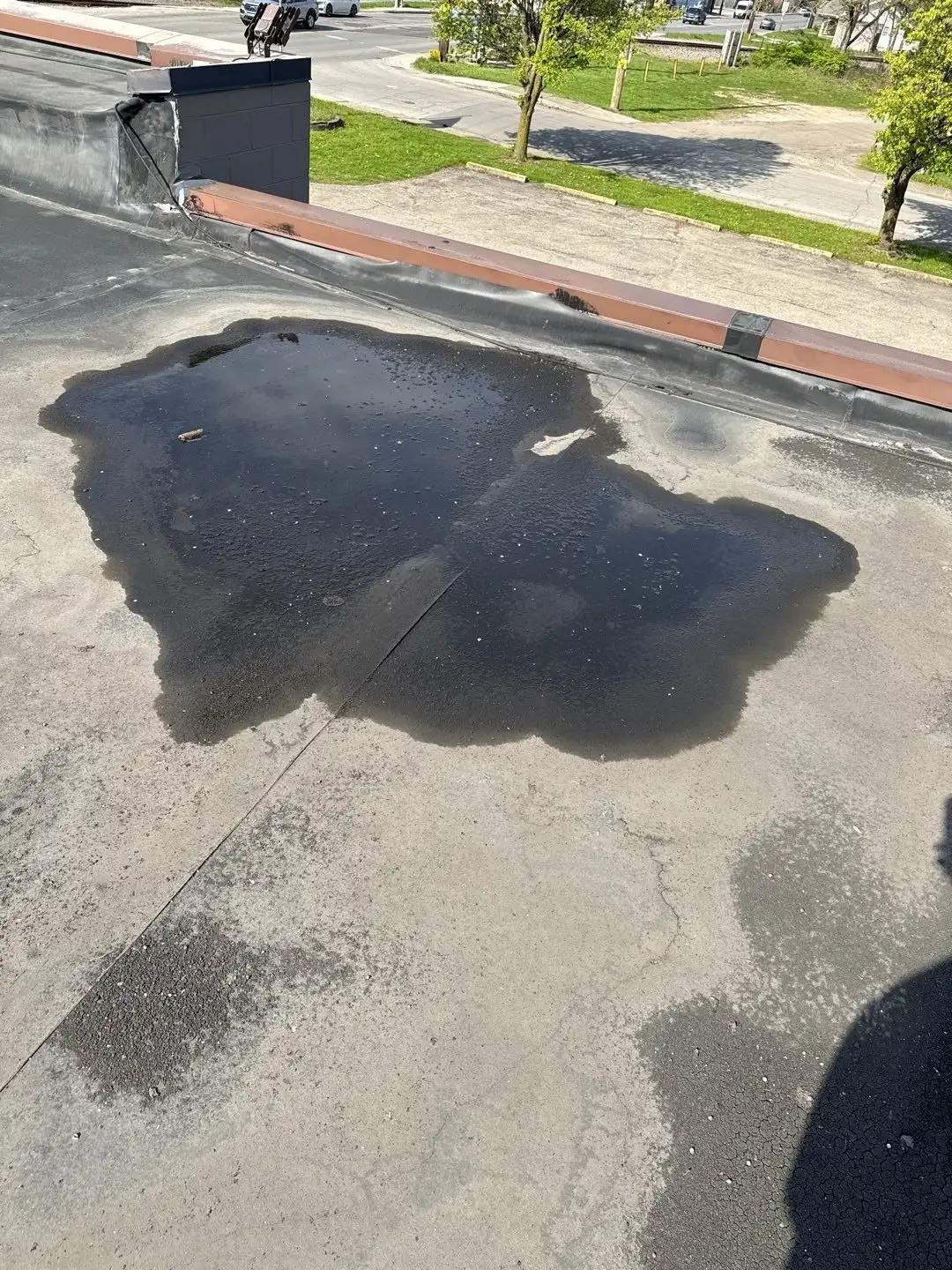
An open or compromised roof lets water into the building, and that water spreads quickly, saturating insulation, damaging the deck, and reaching the interior, contents, and operations below. The longer the roof stays open, the more the water spreads. For a facility, the speed of water damage is the central reason emergency response matters, since each hour of an unaddressed breach means more water entering and more damage done. Stopping the water intrusion fast through emergency protection is what limits the loss to the roof and the building.
Inventory and equipment at risk
Water entering through a storm damaged roof threatens the inventory, equipment, and assets inside, which can be damaged or destroyed by water intrusion, representing a loss far beyond the roof itself. The contents are often the bigger stake. For a Miami County facility, protecting the inventory and equipment below is a primary reason for fast emergency response, since the value of what the roof shelters can dwarf the cost of the roof repair. A rapid response that stops the water protects those assets, which is why facilities act quickly when a storm compromises the roof over valuable contents.
Operations disrupted
A storm damaged roof and the water it admits can disrupt operations, forcing areas to shut down, halting production or distribution, and costing the business in downtime. The disruption compounds the direct damage. For a Peru facility, keeping operations running is a major reason to respond fast, since water intrusion can force parts of the facility offline, and the downtime is costly. Emergency response that stabilizes the roof and stops the water helps keep the operation running or gets it back faster, limiting the business impact of the storm damage.
Damage compounds and worsens
Storm damage left unaddressed compounds, as water continues entering, weakened areas fail further, and a contained problem grows into widespread damage to the roof and building. Delay multiplies the cost. For a facility, the compounding nature of storm damage means a fast response is far cheaper than a delayed one, since the damage and its cost grow with time. Acting quickly to stabilize the roof stops the compounding, containing the problem at its initial extent rather than letting it expand into a much larger and costlier repair.
The insurance timeline
Acting promptly also matters for insurance, since sudden storm damage is typically a covered peril, claims have time limits, and prompt documentation and mitigation support a claim. Coverage depends on the policy and carrier. For a Miami County facility, a fast response includes documenting the damage and mitigating further loss, which insurers generally expect, and acting promptly preserves the ability to file a claim while the damage is fresh and clearly tied to the storm. This is general information, not legal or coverage advice, but prompt action protects both the building and the insurance position.
Preventing secondary damage
Fast response prevents secondary damage, such as mold growth, structural harm, and damage to building systems, that follows from prolonged water intrusion and can be costly and hazardous. Stopping the water early heads off these problems. For a Peru facility, preventing the secondary damage that develops when water sits, mold, structural deterioration, harm to electrical and other systems, is another reason to respond fast. A rapid emergency response that dries out and protects the building limits not just the immediate water damage but the cascade of secondary problems that prolonged exposure causes.
Speed protects the building
Fast emergency response matters because water damage spreads quickly, inventory and operations are at risk, damage compounds, the insurance timeline rewards promptness, and secondary damage follows delay. For a facility owner, this is why a storm damaged roof is an emergency, since acting immediately to stop the damage protects the building, its contents, and the operations far better than waiting ever could.
The larger point about storm damage is that the cost of waiting almost always exceeds the cost of responding, since an open roof keeps letting water in and the damage compounds by the hour. A Peru facility that calls for emergency response immediately contains the problem at its initial extent, while one that delays watches a localized breach become widespread damage to the roof, the structure, and the contents below. The single most important factor in how a storm emergency turns out is how fast the response begins, which is why acting at once matters so much.
The larger point about storm damage is that the cost of waiting almost always exceeds the cost of responding, since an open roof keeps letting water in and the damage compounds by the hour. A Peru facility that calls for emergency response immediately contains the problem at its initial extent, while one that delays watches a localized breach become widespread damage to the roof, the structure, and the contents below. The single most important factor in how a storm emergency turns out is how fast the response begins, which is why acting at once matters so much.
Finally, the facilities that handle storms best are the ones prepared before the storm arrives, with a sound, maintained roof and an emergency roofer already identified. A facility that keeps its roof in good condition and knows who to call faces less damage and a faster response than one scrambling after the fact. Storm readiness is built in calm weather through maintenance and relationships, so that when a storm hits, the roof resists better and the response begins immediately, limiting the loss to the building and the operations it shelters.
It also helps to separate the two phases clearly, since stabilization and permanent repair serve different purposes and both are necessary. A Miami County facility that understands the temporary protection stops the bleeding while the permanent repair restores the roof will neither panic that the tarp is inadequate nor mistake it for the finished job. The emergency response buys time; the permanent repair uses that time to fix the roof properly. Keeping both phases in view leads to a storm damaged roof that is protected immediately and restored durably, which is the goal.
Get a rapid response to storm damage
Peru Commercial Roofing responds rapidly to storm damaged Peru commercial roofs, stopping the water and protecting the building before the damage spreads. Call (765) 676-3491 now for a fast emergency response. Acting immediately is what limits the loss when a storm compromises your roof.