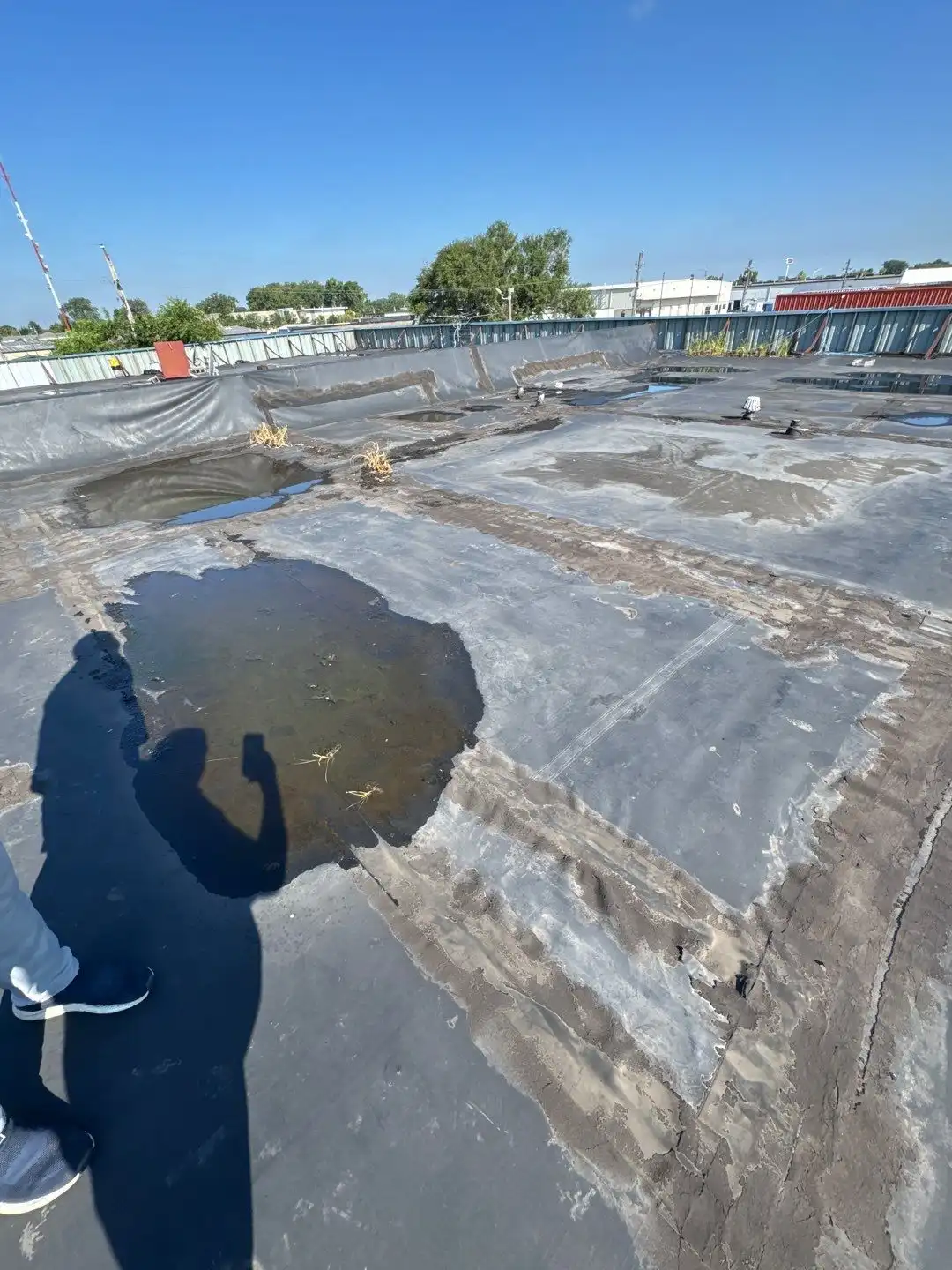
The Warehouse That Almost Lost Its Inventory
One Peru logistics operator called us in October after noticing a small drip near a loading bay. The building was a 48,000 square foot single ply roof, original to the 2008 construction. On the phone, the operations director told us he was hoping for a patch and a quick fix before the holiday shipping crunch. When we walked the roof, we documented 14 separate failure points, most of them around HVAC curbs where the original flashing had pulled away. Three areas had moisture readings above 30 percent in the insulation, which meant the deck below was likely saturated.
We sat down with him the next morning with thermal images and a phased plan. He did not need a full tear off that week. He needed targeted repairs on the active leaks, tarping over two compromised seams, and a budget conversation about replacement within 18 months. The free assessment saved him from spending $40,000 on a panic patch that would have failed by spring. If you are seeing similar symptoms, our commercial roof inspection process walks you through what we check and how we document it.
The follow up on that warehouse is worth telling. He approved the targeted repairs that week, and Peru Commercial Roofing prioritized the dry in work because pallets of seasonal inventory were sitting directly under the worst seam. We came back in March with a full replacement proposal that competed against two other bids, and his finance team had the photo documentation from October to validate every line item. No surprises, no scope creep, no arguments about whether the insulation really needed to come out. That is what good documentation does on the back end.
The Office Park Where the Drains Told the Story
Another call came from a small office park near a retention pond in Peru. The owner had three buildings, all EPDM, all roughly the same age. He wanted to know which one to address first because his capital budget was tight. We inspected all three on the same visit. Building A had clean drains, tight seams, and maybe seven good years left. Building B had ponding water near the parapet and seam shrinkage typical of EPDM past year 20. Building C looked fine from the parking lot but had a soft spot near the center drain that sounded hollow under boot. Moisture probe confirmed saturated insulation across roughly 600 square feet.
We told him to address Building C first, plan Building B for the following budget cycle, and leave Building A alone except for annual housekeeping. That kind of triage is what a real assessment gives you. For context on what to expect when replacement does come up, the repair versus replacement decision guide covers the math we walked him through.
What Triggers a Free Assessment Worth Booking
- You have noticed an interior stain, drip, or musty smell that was not there last quarter
- Your roof is past year 12 and has never had a documented inspection
- You are buying or selling a Peru commercial property and need a roof condition report
- A recent storm brought hail or 50+ mph winds across your area
- Your insurance carrier asked for documentation before renewal
Any of those is enough reason to get a real set of eyes on the roof. The assessment costs you nothing. The decision after it is yours.
What We Actually Look At
On a typical Peru commercial inspection, we are checking field membrane condition, seam integrity, flashing at every penetration, parapet caps, drain function, ponding patterns, insulation moisture, and the underside of the deck when accessible. We take photos of everything, good and bad. The report you get is not a sales pitch with vague language. It is a document you can hand to your CFO, your insurance adjuster, or the next roofer who bids the job.
We also pay attention to things that get overlooked on quick walk throughs. Termination bars that have backed out a quarter inch. Sealant at counterflashing that has lost elasticity and is starting to crack. Walk pads that have shifted and exposed the membrane to foot traffic from HVAC techs. Lightning protection cable that has been re clipped through the membrane without proper sealing. Satellite dish mounts somebody screwed straight into the deck without thinking about water intrusion. None of those things show up in a drone photo or a Google Earth screenshot, which is why a free assessment from Peru Commercial Roofing means boots on the roof, not a desk estimate.
How the Assessment Day Actually Goes
When you call Peru Commercial Roofing about a Peru commercial roof, the first conversation is on the phone. We ask about the building age, the system type if you know it, what symptoms you are seeing, and whether there is active water intrusion. Severity gets assessed right there. If you have water coming in, we move you to the front of the schedule and prioritize tarping or dry in work. If you are doing due diligence ahead of a sale or budget cycle, we book the inspection fast and bring the right gear for your roof type.
On site, expect us to spend two to four hours on a midsize roof, longer on anything over 30,000 square feet. We do not rush. The report follows within a few business days with annotated photos, a written narrative, and a recommendation that ranks issues by urgency. You get the file. You own it. Use it however you need to.
The Restaurant Owner Who Got a Different Answer
A restaurant owner in Peru called us convinced he needed a new roof. The previous contractor had quoted $85,000 for a full replacement on his 6,000 square foot modified bitumen system. When we got up there, the roof was 12 years old, had reasonable seams, and the leak he was chasing was coming from a single failed pitch pan around an exhaust hood, not the membrane itself. We told him a repair under $1,500 would buy him another five to seven years if he stayed on top of annual maintenance.
He asked why the other contractor had pushed replacement. We told him we did not know, and that was not our business. Our business was telling him what we saw. He went with the repair, and a year later he called us back for a coating evaluation, which is a different conversation that the coat versus replace breakdown gets into.